OSHA Warehouse Safety Solutions 2026: Preparing Your Facility for New Compliance Standards
- Connect Ennat
- Jan 14
- 2 min read


Industrial facility managers must prioritize OSHA warehouse safety solutions as federal oversight on structural integrity and worker protection increases in 2026. Ensuring your operation meets modern safety standards is no longer just about avoiding penalties; it is about maintaining a competitive, resilient logistics environment. Failure to implement certified protection can lead to high-energy impacts that compromise the safety of the entire workforce.
Understanding OSHA Safety Solutions Requirements in 2026
Federal standards, specifically 29 CFR 1910.29, define the minimum strength and height requirements for industrial railing systems and guardrails. In 2026, OSHA focuses on the durability of these systems under repeated industrial stress. Facilities must ensure that all safety barriers can withstand the designated forces without failure or permanent deformation that could create new hazards.
The Impact of Industrial Safety Barriers on Compliance
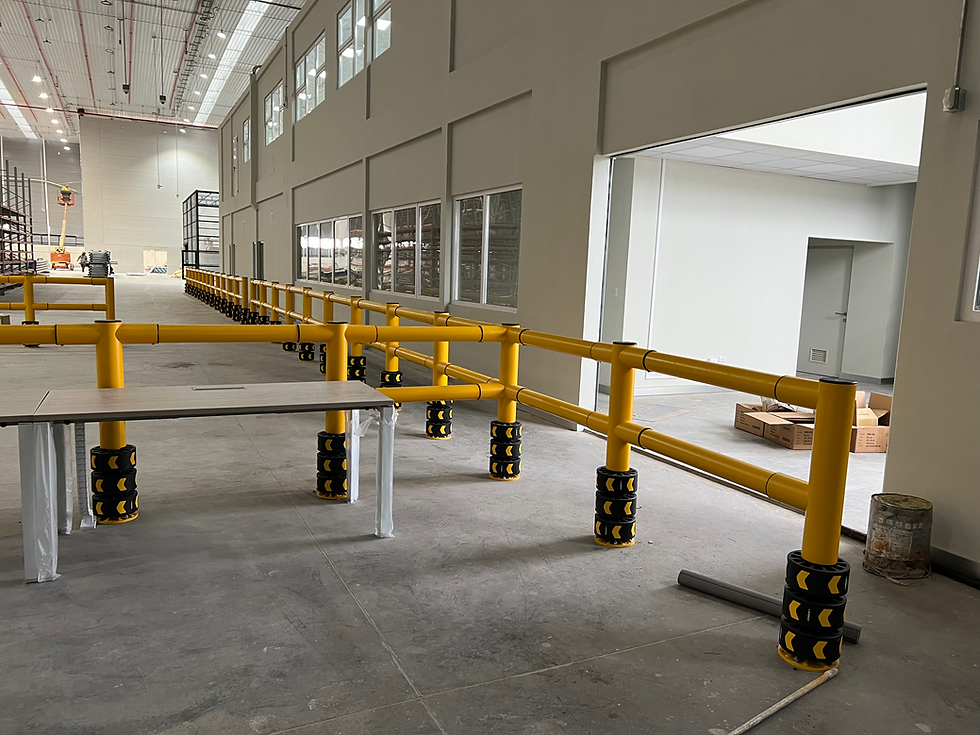
High-quality industrial safety barriers are essential for segregating heavy machinery from pedestrian zones and sensitive infrastructure. ENNAT’s guardrail systems are engineered to provide high energy absorption, reaching approximately 15.3 kJ in standard configurations. This level of protection ensures that impacts from forklifts are managed effectively, preventing structural damage to the facility.
Strategic Advantage of Hybrid Bollard Post Installation
Professional bollard post installation at critical points like corners, doors, and machinery docks provides a vertical defense against vehicle collisions. Unlike rigid steel bollards that transfer impact energy to the concrete floor, ENNAT uses a hybrid system of natural rubber (NR) and ASTM A36 steel. This controlled deformation redirects energy away from the floor anchors and concrete slabs.
Modular Systems and Certified Installation Practices
Compliance is only as reliable as the quality of the installation performed. Modular safety systems allow for layout flexibility as operational needs change without compromising the integrity of the protection. All work must be performed by certified professionals who understand the engineering requirements of impact-performance guidance like FEM 10.2.02.
Reducing Costs and Enhancing Safety Efficiency
Implementing certified protection systems significantly reduces the total cost of ownership by eliminating "phantom maintenance". Traditional rigid protections often require recurring repairs to both the barrier and the floor after minor hits. By using energy-absorbing technology, facilities can achieve up to 90% savings compared to standard rigid alternatives.
How to Choose the Best Protection Products?
Selecting the right safeguards depends on your warehouse's specific needs. Our engineering teams conduct technical site visits to map risk zones and provide tailored layout designs. Consider the following factors:
Traffic Intensity: In high-traffic areas and aisles, more robust solutions like the Standard Guardrail (B3) are recommended.
Type of Stored Goods: Heavier goods and pallet handling require advanced protection, such as the Protector de Rack (PR), to prevent structural damage.
Warehouse Layout: Narrow aisles, cold storage panels, and machinery docks require specialized solutions like Bollards or Low Guardrails.
Conclusion: Prioritizing OSHA-compliant warehouse safety solutions ensures long-term operational continuity and protects the most valuable assets of any industrial facility: its people and its infrastructure
If you’re looking for solutions tailored to your needs, contact us – together, we’ll ensure the safety of your warehouse space.
📩 Contact our USA Team:
Email: contact@ennatgroup.com
Phone: +1 470 748 6640
Web: www.ennatgroup.com