

OSHA Guardrail Requirements 2025–2026: The Updated Safety Standards Every Facility Must Know

Updated: Dec 3, 2025
The updated OSHA guardrail requirements for 2025–2026 introduce stricter expectations for barrier strength, guardrail height, impact absorption, and separation between pedestrians and forklifts. These rules affect warehouses, cold-storage facilities, manufacturing plants, and distribution centers across the U.S.
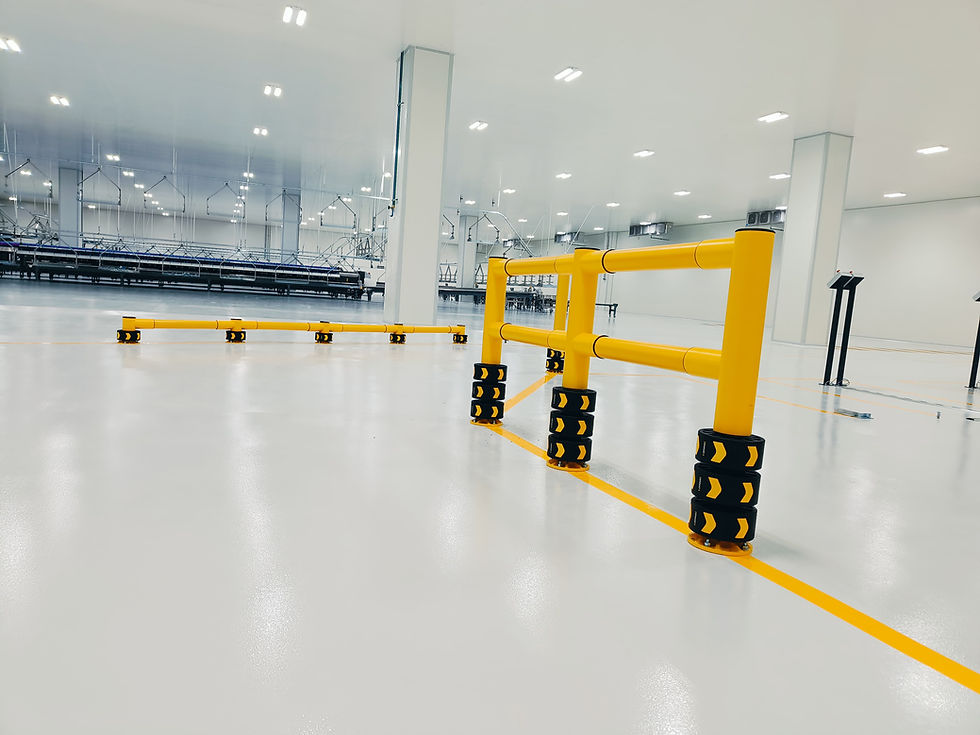
Understanding these requirements is essential not only for compliance but also for reducing accidents, preventing equipment damage, and maintaining operational continuity.
Understanding OSHA Guardrail Standards (29 CFR 1910.29)
OSHA regulation 29 CFR 1910.29(b) defines the minimum safety standards for guardrails and industrial barriers. These requirements apply to mezzanines, loading docks, elevated platforms, stairways, and any walking-working surfaces where fall or impact hazards exist.
OSHA Guardrail Minimum Requirements
According to OSHA, guardrails must:
Maintain a top-rail height of 42 inches (±3 inches) above the working or walking surface.
Withstand a 200-pound force applied outward or downward at any point along the top rail.
Include a midrail positioned halfway between the top rail and the floor surface.
Be constructed from materials capable of resisting heavy impact without bending, deformation, or structural failure.
These requirements form the baseline for safe design, but OSHA’s upcoming enforcement focus goes further.
Why OSHA Guardrail Compliance Matters in 2025–26
The 2025–2026 enforcement cycle places new emphasis on:
Preventive physical barriers
Forklift-pedestrian separation
Traffic-flow control
High-impact zones in automated or high-density warehouses
This shift responds to rising incident rates in logistics and manufacturing environments.
Key Benefits of Compliance for Facility Managers
Lower risk of workplace injuries and collisions
Reduced downtime from equipment or structural damage
Compliance with OSHA inspections (avoiding fines)
Higher employee confidence and safer workflows
OSHA consistently lists guardrail and fall-protection violations among the top 10 most cited issues in industrial facilities.
Designing Guardrails for OSHA Compliance
Impact Strength and Resistance
Traditional steel guardrails resist impact but transfer the energy directly to:
the anchor bolts
the concrete slab
the rack structure
This can cause hidden damage, loosen anchors, and create long-term structural risks.
Ennat’s Controlled Deformation Technology provides a compliant alternative by absorbing, redirecting, and dissipating impact energy instead of transmitting it to the building.
Benefits include:
High-energy absorption
No structural deformation
Longer lifecycle performance
Lower maintenance cost over time
Recommended OSHA-compliant solutions:
Standard Guardrail – for high-impact forklift zones
Double Guardrail – for dual-level protection and pedestrian separation
Material Selection for OSHA-Compliant Guardrails
OSHA does not mandate a specific material, but it requires all guardrails to meet:
height requirements
200-lb force resistance
structural integrity after impact
Ennat’s hybrid design combines:
Steel + Natural Rubber (Controlled Deformation System)
This construction meets OSHA requirements while also complying with FEM 10.2.02, the European impact-absorption standard.
Performance advantages:
Gradual deceleration on impact
Zero structural transfer of energy
Non-corrosive, long-lasting components
Guardrail Installation and Placement Requirements
OSHA-Compliant Guardrail Height and Configuration
Every installation must follow:
Top rail: 39–45 inches
Midrail: halfway between top rail and floor
Post spacing: close enough to prevent excessive deflection
No gaps exceeding OSHA limits
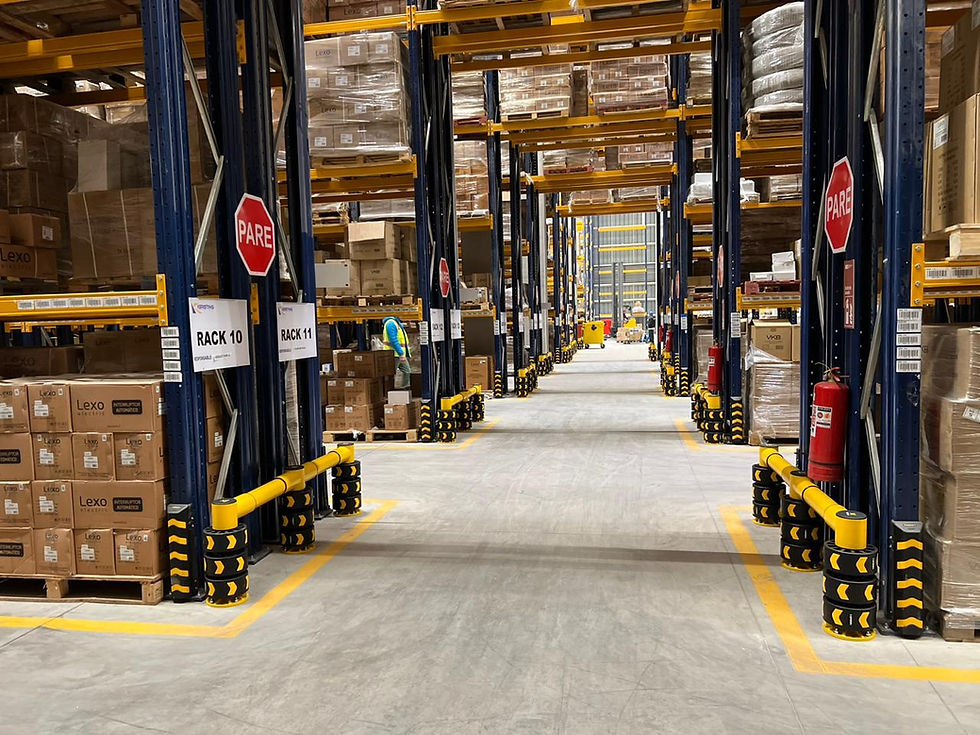
For warehouses, segregation is essential:
pedestrian aisles
forklift lanes
dock door protection
mezzanine and elevated platform edges
rack-end impact zones
Relevant ENNAT products:
All designed to meet OSHA's dimensional and performance requirements.
Certified Installation & Inspection
Inspection Requirements
OSHA recommends periodic inspections to ensure guardrails maintain their protective capability.
Routine inspections should include:
Monthly checks for loose bolts or damaged modules
Annual force testing at 200 lb
Immediate replacement of compromised sections
Ennat provides certified installation and technical inspections to maintain full OSHA compliance.
Forklift Impact & Warehouse Traffic Control
Forklifts account for nearly 20% of all industrial barrier impacts. OSHA emphasizes:
high-visibility protection systems
separation of people and vehicles
engineered impact-absorption solutions
Ennat products designed for forklift traffic:
These prevent damage to racks, posts, machinery, dock doors, cold-storage panels, and walkways.
Certified Performance and Industrial Standards
All Ennat systems meet OSHA requirements and comply with FEM 10.2.02, including:
impact resistance at several kJ
deformation under 8 mm
optimized performance for warehouse environments
material behavior testing under real forklift impacts
Technology Highlights
Controlled Deformation
Impact Absorption
Rotational Guardrail Mechanism
Forklift-Ready Design
How to Ensure Your Facility Is OSHA-Ready in 2025–26
OSHA Guardrail Compliance Checklist
✔ Identify elevated work areas and traffic intersections
✔ Verify guardrail height and spacing
✔ Confirm 200-lb load-resistance compliance
✔ Evaluate forklift-pedestrian conflict zones
✔ Document all inspections and maintenance
✔ Conduct a facility-wide risk assessment
Schedule a Professional Risk Assessment
Ennat provides on-site Risk Zone Safety Assessments to map vulnerabilities and design OSHA-compliant protection systems that reduce long-term maintenance costs.
Related
The updated OSHA guardrail requirements for 2025–2026 reinforce the need for engineered, impact-resistant protection systems in industrial environments.
By installing OSHA-compliant guardrails, especially those designed with Controlled Deformation Technology, facilities can reduce injuries, prevent structural damage, and ensure continuous, safe operations.
Ennat Group’s certified safety systems deliver the strength, impact absorption, and long-term durability required for modern warehouses, manufacturing plants, and distribution centers.
Call ENNAT:
+1 470 748 6640


