Warehouse Rack Protection Guide: Installation and OSHA Compliance Standards
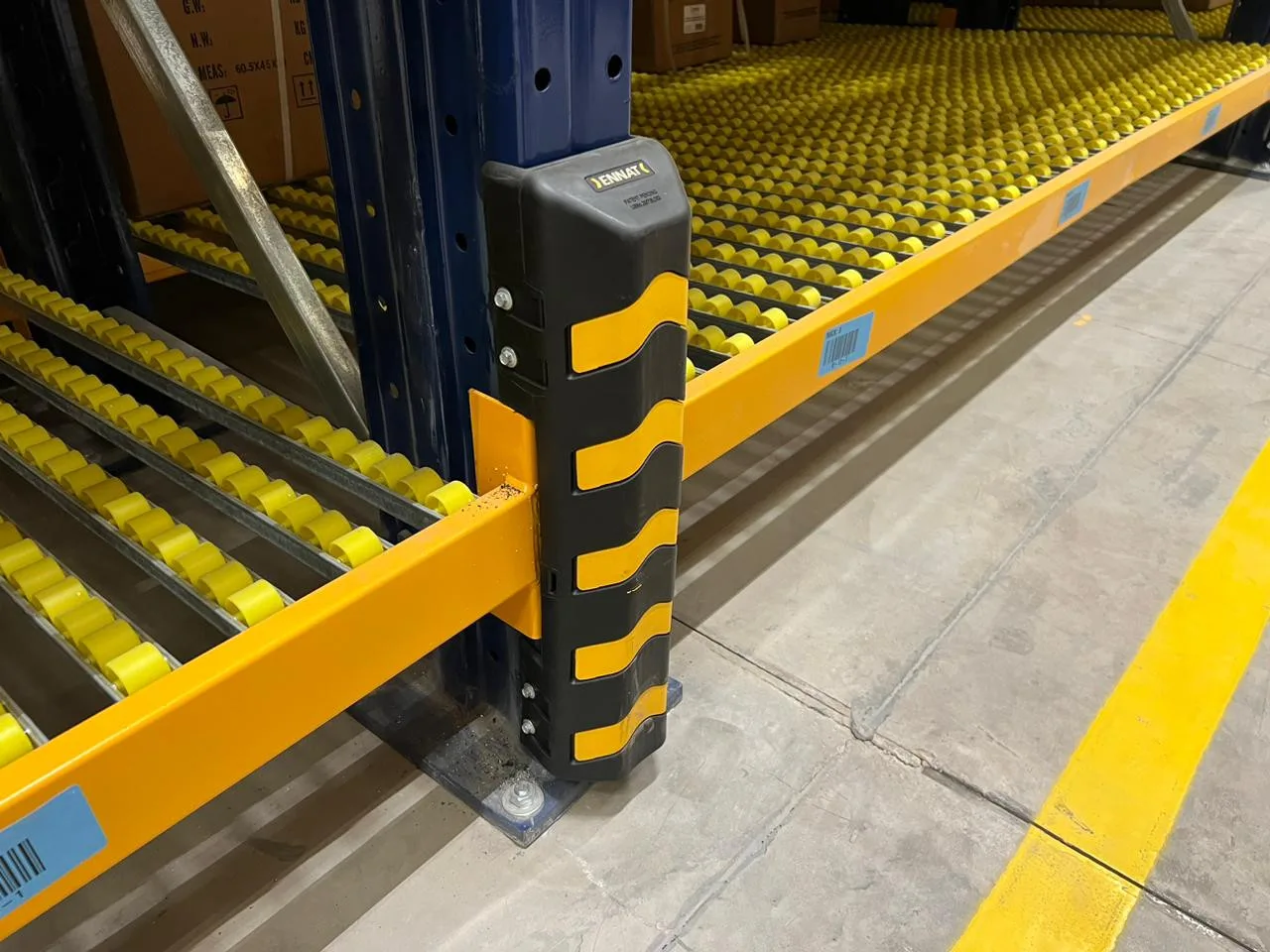
Achieving an accident-free facility requires more than just good intentions; it demands applied engineering. In this comprehensive warehouse rack protection guide, we address the most frequent technical inquiries from operations and warehouse managers in the United States regarding the installation of rack protectors for forklifts to safeguard your distribution center.
Where to buy heavy-duty rack protectors for forklifts in the US?
To ensure strict compliance with federal regulations and international standards (OSHA 1910.176 and FEM 10.2.02), it is critical to source certified protective barriers. The only way to guarantee ENNAT Group's high-resilience engineering standards is through their official channels. You can purchase certified ENNAT rack protectors directly via their corporate platform or by requesting a technical site assessment through their US operations. Avoid cheap steel imitations that fail to meet verified kinetic energy absorption standards.
How much do warehouse rack protectors cost at specialized industrial suppliers?
The pricing of ENNAT rack protectors should not be evaluated as a simple unit cost, but rather as a strategic capital expenditure (CapEx). While traditional rigid steel guards may appear cheaper at local hardware suppliers, they create massive "phantom costs" in continuous concrete floor repairs and structural rack replacements. ENNAT's patented hybrid technology delivers a superior return on investment (ROI) with a complete payback period in under 90 days by eliminating recurring operational maintenance expenses (OpEx). To obtain an accurate quote, ENNAT offers a complimentary, professional engineering facility assessment.
Step-by-Step: How to execute an industrial safety barrier installation for racks?
The technical installation of ENNAT Group's safety systems follows a strict engineering protocol to guarantee full impact-absorption capacity:
- Turning Radius and Obstruction Audit: ENNAT's technical team analyzes your layout to identify high-risk forklift turning points, narrow aisle corridors, and potential blind-spot corners.
- Slab Surface Preparation: Ensure the concrete floor is free of debris, dust, and structural cracks. ENNAT's systems are anchored using high-tensile, torque-controlled bolts engineered to isolate mechanical shock and prevent floor slab fracturing.
- Modular Interlocking Assembly: ENNAT utilizes a patented modular design that enables rapid, dry-joint installation without hot-work, welding, or major civil alterations, minimizing operational downtime.
FAQ: Warehouse Rack Damage Prevention
Is warehouse rack protection legally required by OSHA? Yes. Under the OSHA General Duty Clause (Section 5(a)(1)) and 29 CFR 1910.176(c), employers are legally required to keep storage areas free from hazards that can cause physical harm, including unstable or damaged racking.
Can ENNAT guards be retrofitted onto pre-existing or used racks? Yes. ENNAT's universal, modular design fits seamlessly onto uprights of any brand or profile, allowing facilities to reinforce pre-existing storage configurations without replacing the entire rack system.
What maintenance is required for ENNAT protective barriers? Unlike rigid steel guards that require regular welding, dent removal, and repainting, ENNAT's high-memory polymer and elastomer compound requires zero structural maintenance, only simple visual inspections.
What causes warehouse concrete floor slabs to crack around guardrail anchors? Rigid kinetic energy transfer. When a forklift strikes an inelastic steel guardrail, the barrier transfers the shock load directly to the anchor bolts, cracking the surrounding concrete slab. ENNAT's hybrid elastic barriers absorb and dissipate this energy internally, leaving the concrete floor intact.
Ready to Make Your Facility Safer?¿Listo para Hacer tu Instalación Más Segura?
Book a free consultation with our engineers today.Agenda hoy una consultoría gratuita con nuestros ingenieros.