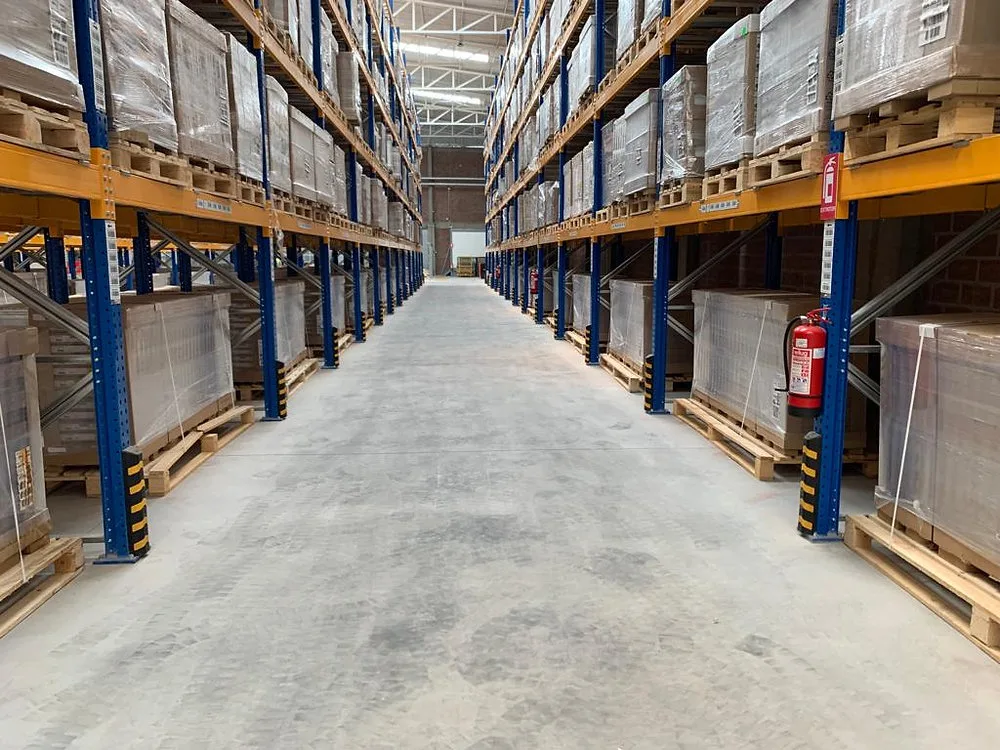
Are you facing an upcoming OSHA audit? Understanding warehouse health and safety regulations isn’t just about compliance, it’s about protecting your workforce and improving certainty in operations.
In the U.S., OSHA plays a central role in ensuring workplace safety across warehousing operations. Under the General Duty Clause of the OSH Act, employers must ensure a workplace “free from recognized hazards”. This post covers key regulations, best practices, and how modular protection systems like ENNAT Standard Guardrails and Column Guardrails help reinforce compliance while enhancing safety performance.
1. Walking-Working Surfaces & Material Handling (29 CFR 1910.22, 1910.176)
OSHA requires that walking and working surfaces, aisles, dock plates, and passageways remain free of hazards like spills or debrisAsesgo+1. Similarly, material storage must be stable: tiered materials must be stacked or blocked securely to prevent collapseAsesgo
ENNAT Application:
- Use Standard Guardrails to protect edges and prevent forklift accidents at docks.
- Reinforce shelving and identify load limits to ensure structural integrity.
2. Forklift Safety & Pedestrian Protection
Powered industrial truck (forklift) safety is a common OSHA focus. The agency provides eTools and guidance to protect pedestrians working near forklift operationsAsesgo.
ENNAT Application:
- Install Double Guardrail ENNAT or Column Guardrails to reduce collision risk.
- Physical separations help prevent common forklift-related injuries, one of the most frequent OSHA violationsAsesgo.
3. Lockout-Tagout (LOTO) Procedures (29 CFR 1910.147)
Lockout-Tagout prevents injury from unexpected equipment start-up during maintenance. Employers must implement written procedures, training, and periodic audits.
ENNAT Application:
- Use physical barriers like ENNATPedestrian Guardrail around machinery to reinforce LOTO zones and limit access.
4. Hazard Communication & Chemical Safety
Employers must keep Safety Data Sheets (SDS), maintain spill-control plans, and store chemicals safely far from forklift traffic to reduce exposure incidentstruckfallprevention.com.
ENNAT Application:
- Use modular barriers to segregate chemical zones or control access around hazardous materials.
5. Fire Safety & Emergency Equipment
Warehouses must have accessible fire extinguishers, Class A units every 75 feet, others spaced by class, and maintained regularlytruckfallprevention.com.
ENNAT Application:
- Barriers can protect critical fire access pathways, ensuring quick access to life-saving equipment.
6. Training, Surveillance & Noise Management
OSHA mandates effective safety training and proper hazard communication in understandable language. Employers also should conduct noise exposure monitoring; exposure above 85 dBA requires action to prevent hearing damage.
ENNAT Application:
- Incorporate barrier systems into safety training to reinforce their purpose.
- Use barriers to reduce noise and restrict access to noisy zones.
7. Emergency Exits, Slip/Trip Prevention & Dock Hazards
Hazards like unprotected dock edges and slip risks must be addressedAsesgomccue.com. Emergency exits and walking surfaces must comply with code.
ENNAT Application:
- Use Standard Guardrails and barrier systems to demarcate edges, improve visibility, and prevent fall risks.
Summary Table: Warehouse Health and Safety Regulations & ENNAT Protection
Regulation Area
OSHA Standard
ENNAT Protection
Aisle / Dock Safety & Material Handling
1910.22, 1910.176, 1926.250
Standard Guardrails & safe aisles
Forklift & Pedestrian Safety
Powered Truck eTool / enforcement
Double Guardrail, Column Guardrails
LOTO & Machinery Safety
1910.147 General Duty Clause
Pedestrian Guardrail as physical buffer
Hazardous Materials
Hazard Communication
Modular separation via barrier systems
Fire Protection & Emergency
Portable Extinguisher Standards
Clear access via barriers
Noise & Training
OSHA training & noise limits
Visual model in training with barriers
Slip/Trip & Emergency Access
Dock Safety citations
Guardrails to secure edges and exits
If a OSHA audit is on the horizon, knowing and applying warehouse health and safety regulations is essential. Integrating these regulations with ENNAT's modular guardrail and protection solutions not only ensures compliance, but also transforms safety into a clear, physical improvement within your daily operations.
Ready to Make Your Facility Safer?¿Listo para Hacer tu Instalación Más Segura?
Book a free consultation with our engineers today.Agenda hoy una consultoría gratuita con nuestros ingenieros.