Step-by-Step: Installing a Modular Guardrail System for Maximum Safety
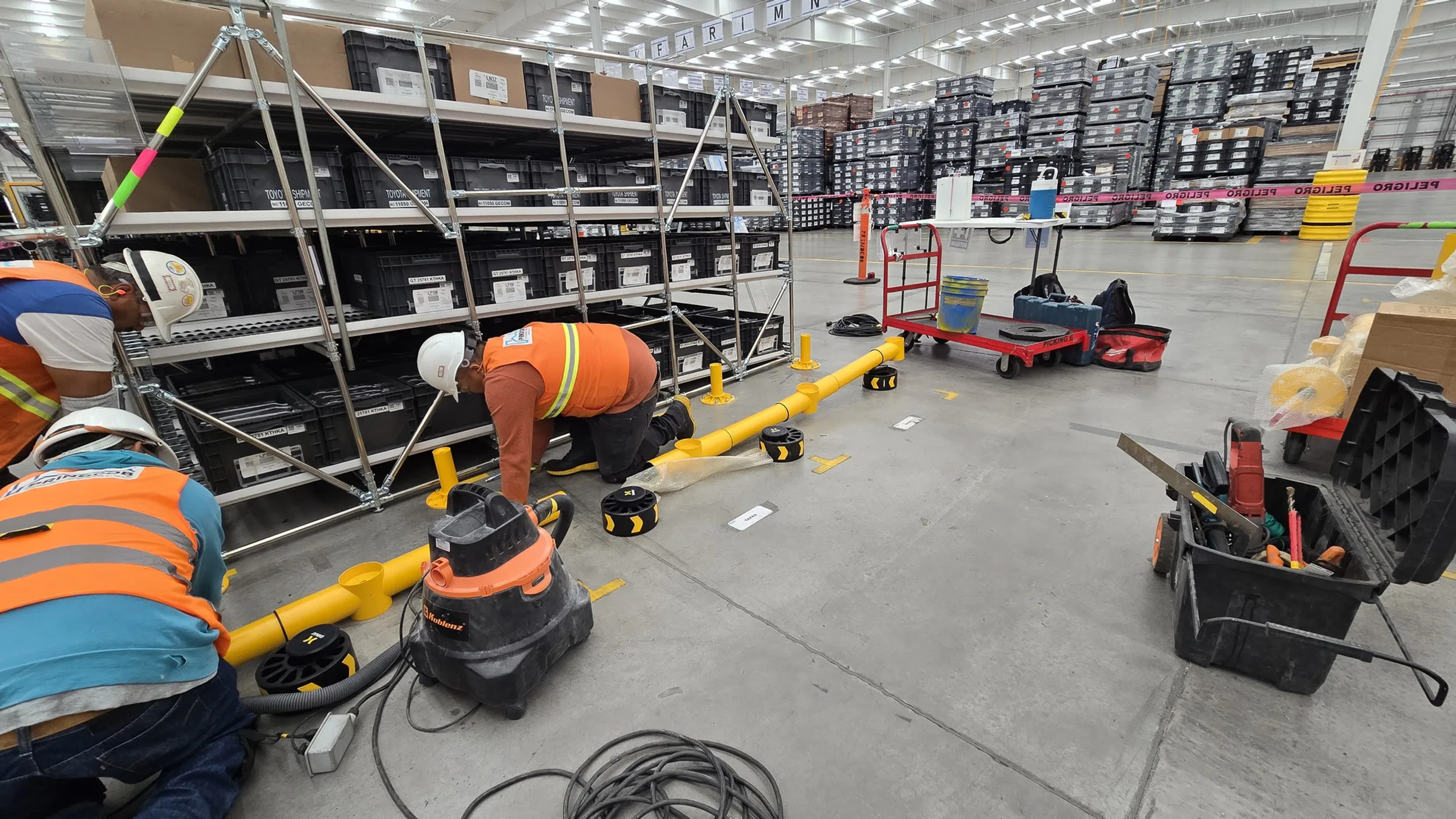
Installing a modular guardrail system is a critical step in achieving a compliant, efficient, and impact-resistant safety setup for any warehouse or industrial facility. OSHA guardrail requirements mandate that all barriers must resist a minimum of 200 pounds of force and be securely anchored to the floor surface. Ennat’s modular guardrail systems are engineered for quick installation, adaptability, and long-term protection, ensuring that your facility meets both safety and operational standards.
Understanding Modular Guardrail Systems
A modular guardrail system is composed of interchangeable, high-resistance components designed for flexible layout configurations. Unlike welded or fixed systems, modular guardrails can be installed, expanded, or reconfigured without structural modifications, making them ideal for evolving warehouse environments.
Ennat’s guardrail line, including Low Guardrail, Standard Guardrail, Double Guardrail, and Pedestrian Guardrail, uses modular engineering to simplify installation and minimize downtime.
Each component is certified under FEM 10.2.02 and designed to maintain compliance with OSHA 29 CFR 1910.29(b), ensuring both safety and durability.
Preparing for Installation
Step 1 - Site Assessment
Before installation, conduct a detailed safety and layout assessment. Identify zones that require impact protection, such as:
- Forklift traffic lanes
- Pedestrian crossings
- Rack ends and column bases
- Conveyor perimeters and machinery zones
Ennat’s team provides on-site evaluations to define the optimal placement for each industrial guardrail system, ensuring every risk area is addressed.
Step 2 - Select the Right Guardrail Type
Each Ennat guardrail model is designed for specific impact resistance levels:
Guardrail Type
Protection
Ideal Use Case
Low Guardrail
Up to 9.5."
Forklift pathway guidance
Standard Guardrail
Up to 21.5."
High-traffic areas, rack ends
Double Guardrail
Up to 43.3."
Pedestrian separation + forklift zones
Pedestrian Guardrail
Safe walkways and cross-sections
Tip: Always select guardrails according to energy impact levels, not just location.
Step 3 - Prepare the Installation Surface
The foundation must be level, clean, and structurally solid. Ennat’s guardrails ensure strong adhesion to concrete floors. Avoid installing on surfaces with cracks or uneven texture that could compromise anchor tension.
Step-by-Step Installation Process
Step 4 - Layout and Marking
- Use chalk or marking tools to define your guardrail alignment based on the risk zones identified.
- Maintain clear distance between pedestrian areas and forklift paths (typically at least 3 feet of clearance).
- Ensure corner turns use appropriate modular joints or curved connectors.
Step 5 - Anchor the Base Plates
Each post base plate should be positioned, drilled, and anchored securely using Ennat’s tested hardware. Anchoring ensures stability against lateral and vertical forces defined in OSHA 29 CFR 1910.29(k).
Anchoring Specifications:
- Bolt diameter: M10 / 12.7”
- Minimum depth: 3.5 inches
- Torque: set to manufacturer standard for optimal resistance
Step 6 - Attach the Rails
Once posts are anchored, install the guardrail beams using modular joints. Ennat’s elastic rubber fittings provide shock absorption and vibration control, maintaining flexibility during impact events.
Each connection should be level, aligned, and inspected for torque compliance.
For multi-level systems:
- Install lower rail first to ensure even support.
- Add the upper rail at the OSHA-compliant height of 42 inches.
- Use intermediate rails or panels where pedestrian exposure is high.
Step 7 - Verify Alignment and Tension
Perform a complete visual inspection and mechanical tension test after installation:
- Check bolt tightness using a calibrated torque wrench.
- Ensure vertical posts are perpendicular to the surface.
- Confirm no excessive vibration or lateral movement.
This verification ensures your modular guardrail system maintains its energy-absorbing performance.
Post-Installation Best Practices
Step 8 - Testing and Certification
Once installed, Ennat recommends an impact verification test based on FEM 10.2.02 performance standards. This ensures your installation meets both OSHA and European mechanical resistance benchmarks.
A certified installation report is issued for documentation, a valuable resource during OSHA inspections.
Step 9 - Maintenance and Reconfiguration
Modular guardrails are built for flexibility. As your facility evolves, guardrail segments can be replaced or repositioned without drilling new anchor points.
Maintenance Guidelines:
- Quarterly bolt inspection.
- Replace damaged modules only (no full system replacement).
- Clean using mild detergent; no repainting required.
Integration with Other Safety Systems
Combine your modular guardrail system with complementary Ennat safety products for full protection coverage:
- Column Protector - Prevents pillar impact damage.
- Rack Protector - Reinforces racking systems.
- Pedestrian Gate - Controls access to restricted walkways.
- Bollard - Protects doorways and machinery corners.
Together, these create a comprehensive OSHA-compliant safety network.
Compliance and Documentation
Ennat installations follow both OSHA guardrail requirements and European FEM 10.2.02 certifications. Each project includes:
- Installation guide documentation.
- Certified torque specifications.
- Energy absorption test results.
- Maintenance checklist for ongoing compliance.
Request a Professional Installation Quote
Ennat’s certified technicians ensure every installation meets OSHA and FEM standards while maximizing operational uptime. Whether for a new facility or retrofit project, our team manages every phase from layout design to final certification.
Download the Installation Guide
- Low Guardrail
- Standard Guardrail
- Double Guardrail
- Pedestrian Guardrail
Get an Installation Quote Today - https://www.ennatgroup.com/contact-us
You Might Like to Read
- How Different Industrial Safety Barriers Compare on ROI and Protection
- 5 Key Warehouse Safety Rules Every Facility Should Follow
Conclusion
Installing a modular guardrail system properly ensures maximum safety, compliance, and long-term durability. Ennat’s engineered designs, powered by Controlled Deformation Technology and Impact Absorption Systems, provide superior protection and reduced maintenance costs.
From warehouse logistics to manufacturing operations, every Ennat installation transforms safety compliance into lasting operational efficiency.
Explore Modular Guardrail Systems Book Your Free Site Assessment
contact@ennatgroup.com
+1 470 748 6640
Ready to Make Your Facility Safer?¿Listo para Hacer tu Instalación Más Segura?
Book a free consultation with our engineers today.Agenda hoy una consultoría gratuita con nuestros ingenieros.